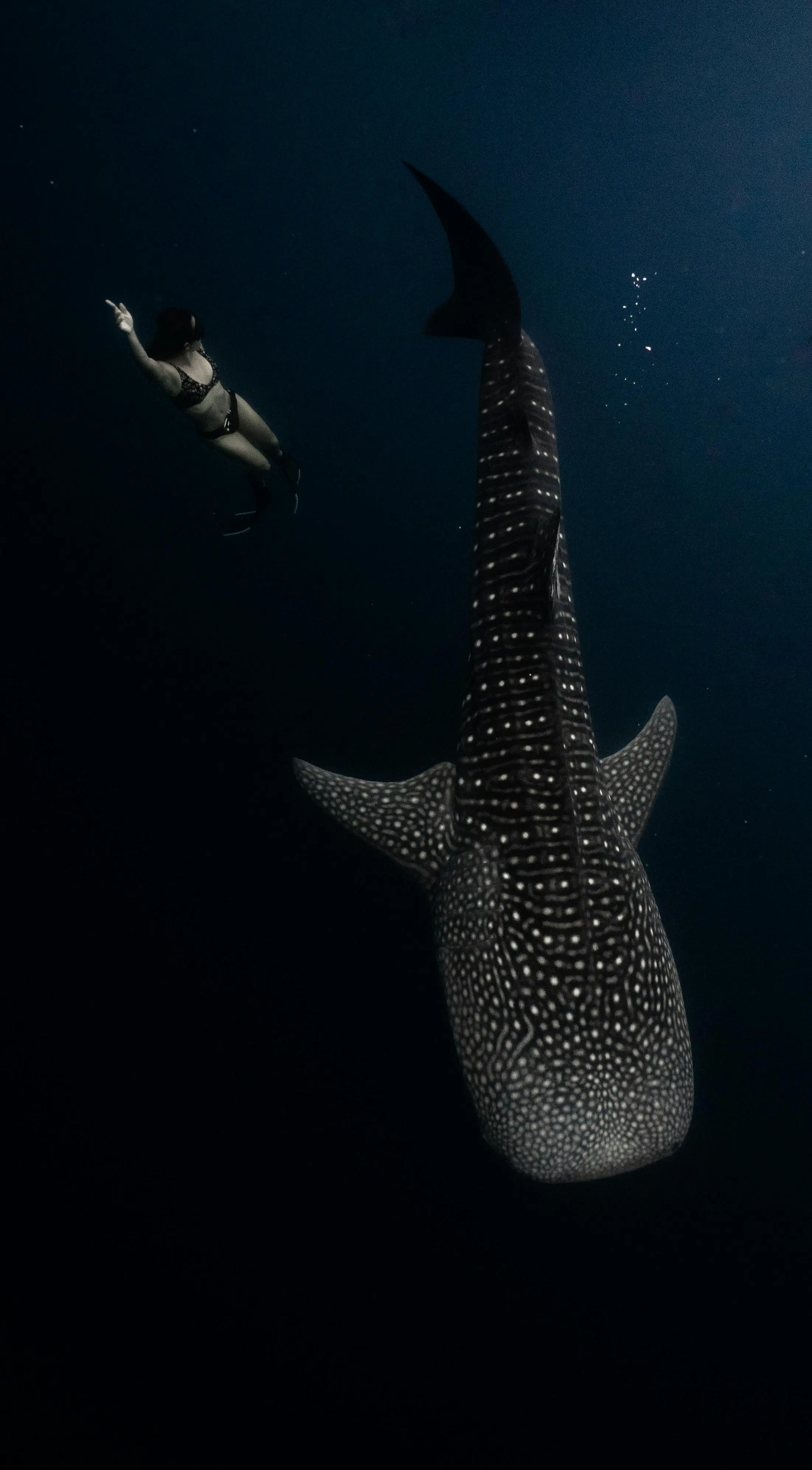
Whale sharks (Rhincodon typus) are the largest fish on Earth — not whales, not dangerous, and not well understood even by the scientists who study them. They can reach 12 metres in length, live for over 100 years, filter thousands of litres of water per hour, and migrate thousands of kilometres following plankton blooms. Here is everything science currently knows about them.
What Is a Whale Shark?
A whale shark is a filter-feeding shark — not a whale. The name comes from its size and feeding behaviour, which resembles a whale more than a typical shark. It is the largest fish species on Earth and the largest non-mammalian vertebrate alive today.
| Fact | Detail |
|---|---|
| Scientific name | Rhincodon typus |
| Class | Chondrichthyes (cartilaginous fish — sharks, rays) |
| Order | Orectolobiformes (carpet sharks) |
| Conservation status | Endangered (IUCN Red List) |
| Maximum recorded length | ~18.8 metres |
| Average adult length | 9–12 metres |
| Maximum recorded weight | ~21.5 tonnes |
| Lifespan estimate | roughly 80–130 years |
| Range | Tropical and warm temperate oceans worldwide |
How Big Do Whale Sharks Get?
The largest verified whale shark on record measured 18.8 metres and weighed approximately 21.5 tonnes — roughly the weight of three adult African elephants. Most adults encountered in the wild are 6–12 metres long.
Juvenile whale sharks — the ones most commonly seen at aggregation sites like Puerto Princesa — typically measure 3–7 metres. These younger animals gather in coastal areas where plankton concentrations are high.
Size differences between individuals are significant. A 4-metre juvenile and an 8-metre adult behave very differently in the water. The juveniles seen in Puerto Princesa’s open ocean are more active near the surface and typically easier to observe than fully mature adults.
What Do Whale Sharks Eat?
Whale sharks are obligate filter feeders. They eat almost exclusively:
- Plankton — copepods, krill, fish eggs, small crustaceans
- Small fish — anchovies, sardines, mackerel eggs
- Squid — occasionally
They do not eat humans. They have no teeth capable of biting — just 300–350 rows of tiny vestigial teeth that play no role in feeding. They feed on plankton and small fish and have no predatory interest in humans.
How They Feed
Whale sharks feed in two ways:
- Ram filter feeding — swimming forward with their mouth open, passively filtering water through gill rakers
- Active suction feeding — opening and closing their mouth rapidly to draw water in, often observed when feeding at the surface
A single whale shark can filter 6,000 litres of water per hour. They follow plankton blooms driven by ocean currents, upwellings, and seasonal temperature changes — which is why they aggregate at predictable locations during certain months.
Where Do Whale Sharks Live?
Whale sharks are found in all tropical and warm temperate oceans, roughly between 30°N and 35°S latitude. They are highly migratory, crossing entire ocean basins.
Major Aggregation Sites
| Location | Season | Notes |
|---|---|---|
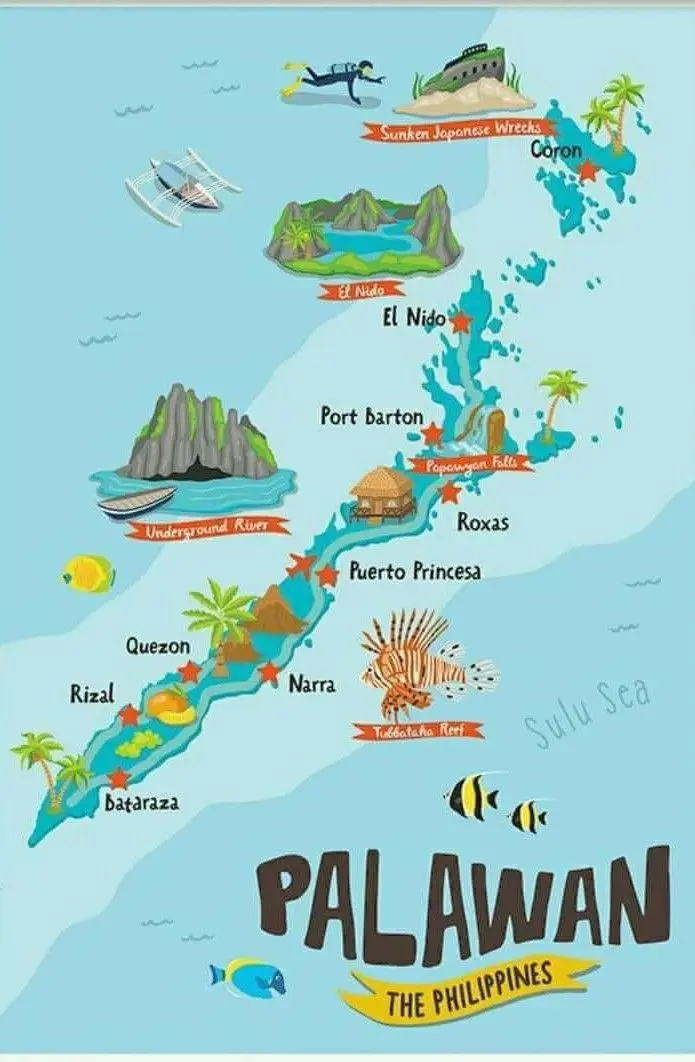
| Puerto Princesa, Palawan, Philippines | April–October | Wild, open ocean; Tour Z operates here |
| Oslob, Cebu, Philippines | Year-round | Provisioned (fed) — controversial |
| Donsol, Sorsogon, Philippines | November–June | Wild, community-managed with WWF-Philippines |
| Ningaloo Reef, Western Australia | March–July | One of the most studied populations |
| Isla Holbox / Isla Mujeres, Mexico | June–September | Mass aggregation |
| Mafia Island, Tanzania | October–February | Wild, uncrowded |
| South Ari Atoll, Maldives | Year-round | Resident juvenile population |
| Galapagos Islands, Ecuador | Varies | Deep water encounters |
The Puerto Princesa aggregation is driven by seasonal plankton blooms in the Sulu Sea. These are wild open-ocean animals — not conditioned, not fed, not tethered. They come because the food is there.
Whale Shark Migration
Whale sharks are among the most extensively travelled animals on Earth. Satellite tagging has tracked individuals crossing the Pacific Ocean — journeys of over 13,000 kilometres.
What We Know
- Whale sharks can dive to depths of 1,800 metres and regularly make deep dives during migration
- They follow predictable seasonal routes tied to plankton blooms and water temperature
- Individual animals return to the same aggregation sites in consecutive years
- Females appear to be less frequently sighted at coastal aggregation sites — scientists believe many pregnant females and large adults remain in deeper offshore waters
What We Don’t Know
Whale shark migration remains poorly understood. Despite decades of satellite tagging, scientists do not know where most whale sharks breed, where females give birth, or the full extent of their open-ocean routes. The deep ocean movements of large adults are almost entirely undocumented.
Whale Shark Reproduction
Whale sharks reproduce slowly — which is a key reason their populations are vulnerable. What is known:
- Whale sharks are ovoviviparous — eggs hatch inside the mother; live pups are born
- A single pregnant female captured in 1996 was found to carry 304 pups at various stages of development — the largest number of offspring recorded for any shark
- Pups are born at approximately 55–65cm in length
- Age at sexual maturity is estimated at 25–30 years based on growth rate studies
- Gestation period is unknown
- No whale shark birth has ever been directly observed in the wild
The combination of late sexual maturity, slow reproduction rate, and high juvenile mortality makes whale shark populations extremely slow to recover from losses.
Conservation Status
Whale sharks are listed as Endangered on the IUCN Red List. Global population estimates are difficult — these are highly migratory, wide-ranging animals across enormous ocean areas.
Key Threats
- Ship strikes — whale sharks spend significant time at or near the surface and are vulnerable to vessel collisions; ship strikes are the leading cause of adult mortality in many areas
- Fisheries bycatch — accidental capture in fishing nets
- Targeted fishing — whale sharks are still hunted in parts of Asia for their fins, liver oil, and meat; international trade is regulated under CITES Appendix II but enforcement varies
- Tourism pressure — provisioned (fed) tourism sites, overcrowded encounters, and boat traffic stress animals and may disrupt normal feeding behaviour
- Climate change — shifting plankton distributions affect food availability and migration timing
Legal Protection
Whale sharks are protected from fishing in the Philippines since 1998 under Republic Act 8550. International trade is regulated under CITES. Despite this, poaching continues in some areas.
Whale Shark Identification
Every whale shark has a unique pattern of white spots and stripes on its dark grey back — like a fingerprint. Scientists at the Wildbook for Whale Sharks database use photographic identification to track individual animals worldwide. A single underwater photograph of the spot pattern behind the left gill can be submitted to identify a specific animal and track its movements over years.
If you encounter a whale shark, photograph the area behind the left pectoral fin and submit it to sharkbook.ai — your photo contributes directly to population research.
Whale Shark Behaviour
What to Expect in the Water
Wild whale sharks are generally indifferent to human presence when approached carefully. Their natural behaviour:
- Slow, steady swimming — typical cruising speed is 1–3 km/h while feeding near the surface
- Directional change — whale sharks change direction slowly; their turning radius is large
- Occasional acceleration — if disturbed, a whale shark can move rapidly with a few powerful tail strokes; this is a startle response
- Diving — if the surface becomes too crowded or noisy, a whale shark will dive; this ends the encounter
Why Crowd Size Matters
Group size shapes an encounter more than any other booking decision, and the research behind that is set out in why group size decides what you see.
A whale shark will tolerate quiet observers at respectful distances. It will not tolerate fifteen people swimming in front of its face. Responsible whale shark tourism guidance commonly uses minimum-distance rules around the body and tail. These distances exist because close contact stresses the animal and disrupts feeding.
Large groups (25+ swimmers) inevitably violate these distances as individuals position themselves for photos. This is the single most important reason to choose a small-group operator.
Oslob vs Wild Encounters: What the Science Says
The Oslob, Cebu whale shark interaction — where fishermen feed whale sharks to attract them for tourists — is the most controversial whale shark tourism site in the world. The science is unambiguous:
- Altered behaviour: Animals at Oslob have shifted from nocturnal feeding patterns to daytime surface feeding conditioned by handouts
- Increased boat strikes: Oslob animals show significantly higher rates of boat strike injuries than wild populations
- Reduced mobility: Individual animals spend less time at sea on migration when dependent on provisioned food
- Stress indicators: Research published in Tourism Management (2019) found elevated stress hormone levels in Oslob animals compared to wild populations
Oslob was listed by World Animal Protection as one of the cruelest wildlife attractions on Earth.
Wild encounters — Puerto Princesa, Donsol, Ningaloo, Holbox — involve animals behaving naturally, in open water, following their own agenda.
What the Research Says About Honda Bay
Palawan’s aggregation is not folklore. Honda Bay is designated an Important Shark and Ray Area by the IUCN Shark Specialist Group, qualifying both because Endangered whale sharks and oceanic manta rays regularly occur there and because the bay is a feeding area for them. The designation records roughly 428 individuals identified since 2018 and a mean of about 41 sharks present at any one time during the season, placing Honda Bay among the 25 largest whale shark aggregation sites in the world.
The underlying study, published in Scientific Reports in 2019 by Araujo, Agustines, Tracey, Snow, Labaja and Ponzo, photo-identified 117 individual sharks from 507 encounters between April and October 2018, with a further 66 identified from public photographs. The animals averaged 4.46 m and were 96.5% male, confirming a juvenile male aggregation rather than a gathering of adults.
Satellite telemetry then linked the bay internationally: one shark travelled to Lahad Datu Bay in Sabah, Malaysia and returned within a year, another reached the Malay-Filipino border, and an individual first identified in East Kalimantan, Indonesia in 2013 was resighted in Honda Bay in 2018. The paper documents the first international return movement of whale sharks recorded in Asia.
Whale Sharks in the Philippines
The Philippines has three primary whale shark aggregation sites:
Puerto Princesa (Palawan) — April to October. Open ocean, about 20 minutes offshore by speedboat. Wild animals following plankton blooms. No feeding. Tour Z operates here.
Donsol (Sorsogon) — roughly November to June, peaking March to May. The country’s longest-running community-managed whale shark programme, developed with WWF-Philippines. Wild, no feeding.
Oslob (Cebu) — Year-round. Provisioned (fed). High visitor numbers. Controversial. Cheap and easy to access — but the animal welfare situation is well-documented.
The Philippines government has protected whale sharks nationally since 1998. Palawan has additional environmental protections as a UNESCO Biosphere Reserve.
Frequently Asked Questions
Are whale sharks dangerous?
No. Whale sharks are filter feeders with no capacity to bite a human. Their threat to swimmers is limited to accidental contact with their powerful tail, which can cause injury if a swimmer positions themselves behind the animal. This is why Tour Z guides brief every guest on positioning before water entry.
Can whale sharks eat a human?
No. Whale sharks are filter feeders that eat plankton and small fish. They have no predatory interest in humans.
How long do whale sharks live?
Current estimates based on vertebral growth rings and carbon-14 dating suggest roughly 80–130 years. The largest animals may be well over 100 years old. This slow lifecycle makes population recovery from losses extremely slow.
How many whale sharks are left?
No reliable global population estimate exists. The species’ wide range and deep-ocean movements make counting impossible. The IUCN lists them as Endangered, uplisted from Vulnerable in 2016 after the global population was inferred to have declined by more than 50% over three generations, with the Indo-Pacific subpopulation down by around 63%.
What is the difference between a whale shark and a basking shark?
Both are large filter feeders, but they are not closely related. Basking sharks (Cetorhinus maximus) are found in cold temperate waters, grow to about 12 metres, and are the second-largest fish (after whale sharks). They filter feed differently — with their mouth permanently open — and are rarely encountered by tourists.
Where is the best place in the Philippines to see whale sharks ethically?
Donsol and Puerto Princesa are both wild, ethical aggregation sites. Donsol operates December–May; Puerto Princesa operates April–October. The seasons do not overlap, so it’s possible to visit both on a longer Philippines trip.
Book the wild whale shark tour in Puerto Princesa → · See our sighting log · Ethical whale shark tours compared