Tomorrow's search forecast
Forecast pending
Use weather as a planning note, not a sighting prediction.
Pending
waves
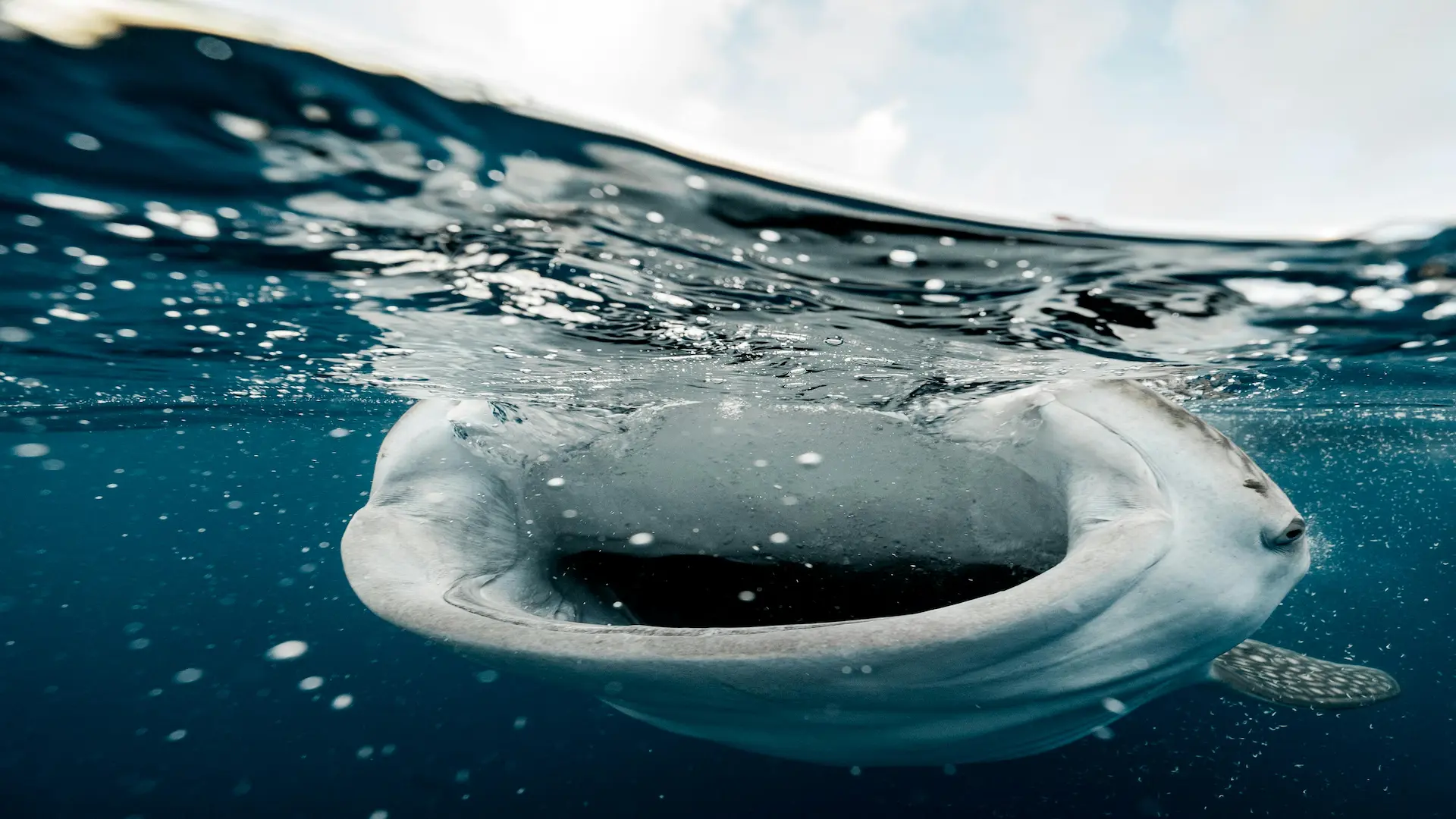
Max 10 guests to reduce crowding around each animal · Wild open ocean · No feeding · No baiting · Clear wildlife-sighting policy.
The Puerto Princesa whale shark tour is a small-group open-ocean expedition from Puerto Princesa, Palawan, operating during the April to October whale shark season. Tour Z uses a 30ft speedboat, caps each departure at 10 guests, includes hotel pickup, snorkel gear, lunch, fees and guide support, and does not feed, bait or chase whale sharks. Sightings are not guaranteed because the animals are wild.
As of 15 October 2026, Tour Z crew logs record the last whale shark sighting on 14 October 2026 and the last dolphin pod on 14 October 2026. 65 of 73 completed field logs recorded at least one whale shark (89%). Those logs count 287 whale sharks, and the largest crew size estimate is 14m. Sightings are wild and are never promised.
Photo-ID and telemetry highlight a global whale shark hotspot in Palawan, Philippines, published in Scientific Reports, documents a seasonal whale shark aggregation in Honda Bay. From April to October 2018 the authors ran 159 surveys and identified 117 individual whale sharks, mostly juvenile males, feeding in the bay. A further 66 individuals came from operator and public photographs.
The Honda Bay Important Shark and Ray Area lists the bay as a feeding area for the endangered whale shark and the oceanic manta ray. That page reports about 428 whale sharks identified there since 2018, using the 2019 study and later survey work.
These sources describe the animals and the place. They do not certify, endorse, or review Tour Z. Tour Z’s own field notes are a separate crew log.
Independent research by LAMAVE has studied whale sharks in Honda Bay since 2016 and describes an April-to-October seasonal aggregation in the bay. Tour Z records its own trip sightings separately; the same waters may also hold dolphins, rays, turtles, tuna and other pelagic wildlife.
The main expedition target: a wild, filter-feeding shark that visits Honda Bay seasonally, usually April to October, to feed on plankton, krill and small schooling fish.
Resident and passing dolphin pods may ride bow wake in deeper channels. Tour Z uses parallel cruising only, never chasing or cutting across a pod.
Dugongs are sirenians related to manatees, but they are not manatees. In Palawan, dugong is the correct species name. Sightings are rare and treated as a conservation event.
Green turtles and hawksbill turtles occur around Puerto Princesa. They surface to breathe and feed in seagrass and reef areas; observation is passive only.
Large rays, including oceanic manta rays Mobula birostris, are possible offshore megafauna in the wider Sulu Sea. Encounters are uncommon but important to log.
Blacktip reef sharks, bamboo sharks, skipjack tuna, trevallies, barracuda and mackerel may appear where reef edges, baitfish and current lines meet.

Whale shark scouting depends on reading open water, not following a fixed route. A faster boat lets the crew cover more ground while the morning sea is usually easier to read.
Our 30ft speedboat reaches the offshore search area faster than a traditional bangka and keeps the group capped at 10 guests. That gives the guide more control over briefing, entry timing and swimmer spacing.
A speedboat does not guarantee sightings. It gives the crew better range, manoeuvrability and timing when wild animals choose to stay near the surface.
These are operational differences guests can verify before booking: group size, search range, briefing style, food, and no-sighting policy.
| Tour Z | Typical larger boat tour | |
|---|---|---|
| Boat and search range | 30ft speedboat; wider morning scouting range | Varies by operator and boat type |
| Group size | Max 10 guests | Often larger join-in groups |
| Wildlife approach | No feeding, no baiting, no chasing | Ask each operator before booking |
| Water entries | Guide-led spacing and distance briefing | Varies by operator and group size |
| Food on board | Fresh lunch, water and non-alcoholic drinks | Varies by operator |
| No-sighting policy | No wildlife-sighting refunds; clear-water backup stop when conditions allow | Varies by operator |
Wild whale sharks are exactly that — wild. We do not offer refunds for non-sightings, and we never feed, bait, or chase animals to force an encounter. If the ocean has other plans, we keep the morning worthwhile on the water.
When conditions allow, the crew brings the group to a quiet reef or coastal area with clear water, away from the busiest boats.
We use the time for lunch, clear-water photos, snorkelling if the sea is suitable, and a calm place to relax before heading back.
Same speedboat, same crew, same lunch, same timing. We never cut the tour short because wildlife chose not to appear.
We don't feed the sharks to force an encounter. When one happens, it's real. When it doesn't, we still give you an honest morning on the water.
From hotel pickup to the moment you step back on land — here's how your whale shark day in Puerto Princesa unfolds.
Your air-conditioned van collects you from your Puerto Princesa hotel. No tricycle to the pier, no figuring out transport — just step outside when your driver arrives. Transfer is approximately 30 minutes to the speedboat launch point.
Safety briefing, gear distribution, and you're off. Our 30ft speedboat reaches the offshore search area quickly, giving the crew more time to read surface movement, birds, baitfish and sea conditions during the morning window.
We arrive in Honda Bay's open water and start reading the ocean: surface movement, feeding birds, water colour changes. Our guide scans with binoculars, looking for the tell-tale signs of a whale shark near the surface. When conditions allow, we use a drone to cover wider areas. This is a real expedition — not a theme park ride — and this phase is part of the experience.
When a whale shark is located, you slip quietly into the water for a respectful, guided swim alongside the world's largest fish. The guide briefs spacing before entry: keep distance from the body and tail, never touch, never block the animal's path, and keep flash off.
Our team photographs the unique spot patterns behind the gills of each whale shark when conditions allow. We log GPS coordinates, behaviour, estimated size, and ocean conditions so the operation has a cleaner record of what the crew actually saw.
If conditions allow and pods are nearby, we look for wild Spinner and Bottlenose dolphins in the deeper open-water channels. Dolphins are an unpredictable bonus, not a guarantee — our quiet engine means any encounter happens on the dolphins' terms.
A fresh lunch served on the boat or at a quiet coastal stop when conditions allow. Expect simple local food, fruit, water and non-alcoholic drinks. Tell us about dietary needs before departure so the crew can prepare properly.
Back at the pier around 1:00 PM. Your driver returns you to your hotel in Puerto Princesa City, leaving the afternoon open for rest or onward travel.
All-inclusive means all-inclusive. No pier surprises, no extra fees, nothing to pay on the day.
Not included: personal towel · alcoholic beverages · gratuities (optional)
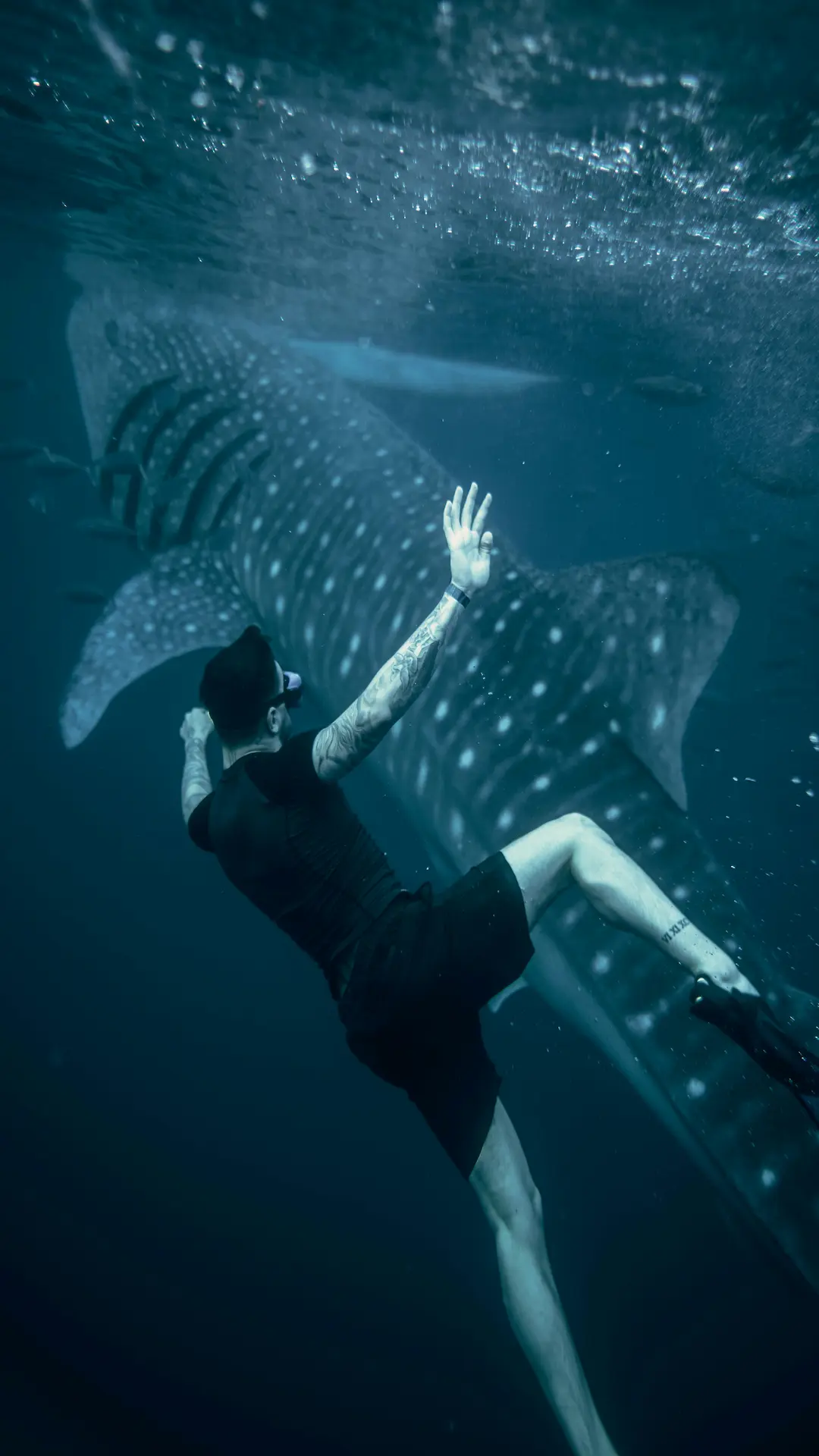
When conditions allow, our team records photo identification angles, GPS encounter points, estimated size, behaviour and sea conditions. Those notes help the crew improve decisions over time and keep the operation accountable to what was actually observed.
Whale sharks (Rhincodon typus) are classified as Endangered on the IUCN Red List. We treat each encounter as a wildlife event first and a guest experience second.
That is why our rules are conservative: no feeding, no baiting, no chasing, careful spacing, and a small group around each animal.
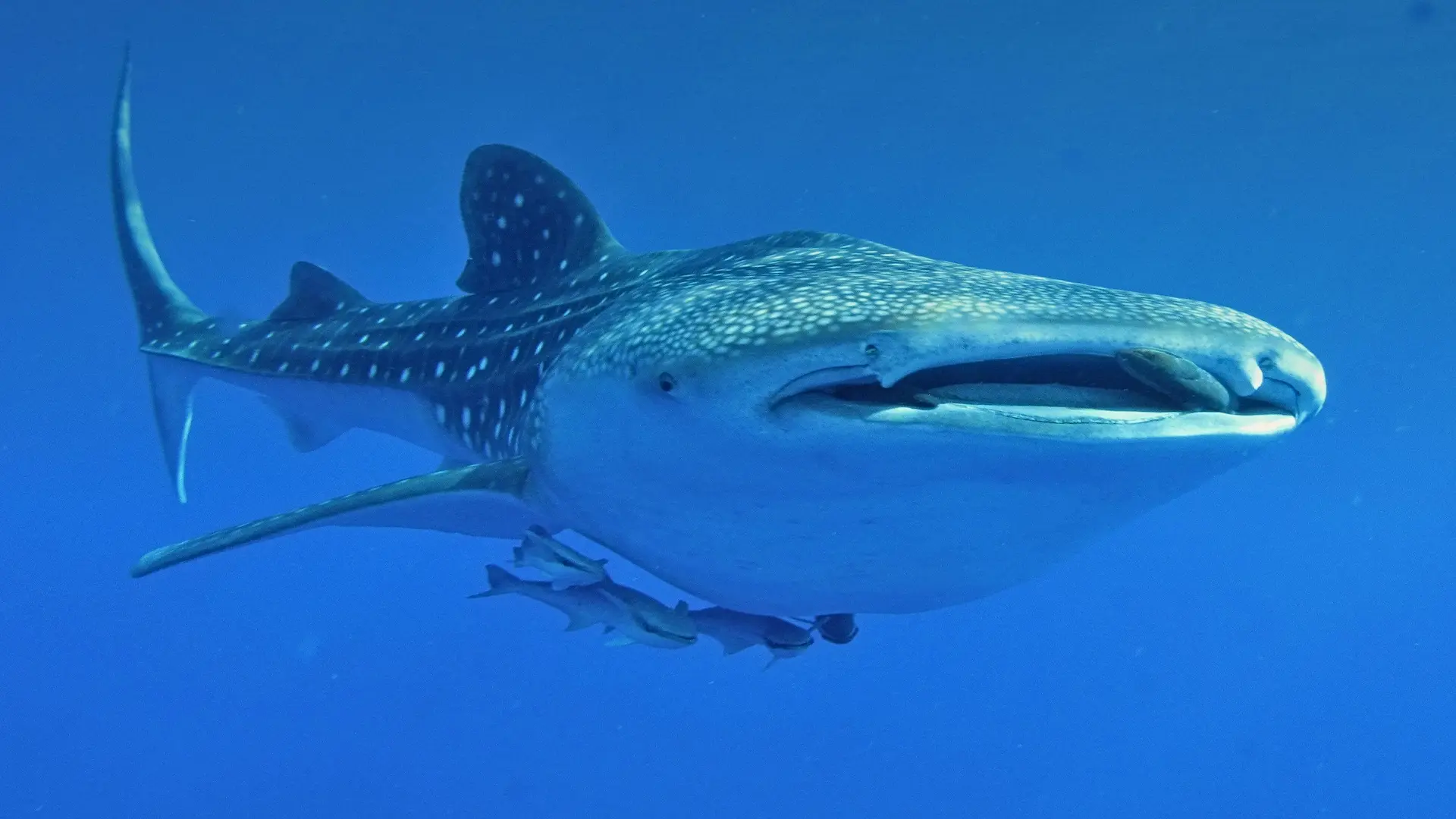
Responsible whale shark tourism is not a slogan. It is a set of practical choices repeated every time the boat leaves.
Puerto Princesa vs Oslob (Cebu): Oslob uses daily artificial feeding to keep whale sharks close to shore for tourism. Puerto Princesa is different: the animals are wild, free-moving and less predictable. Tour Z does not feed, bait or chase them. Read our full comparison →
Yes — you can see whale sharks in Palawan. Puerto Princesa is one of the places in the Philippines where whale sharks may be encountered in open ocean, with no feeding. Unlike Oslob in Cebu where sharks are fed daily, Puerto Princesa's whale sharks are free-moving animals following natural food sources. The season runs April through October, with stronger reporting from May through September.
No ethical operator can guarantee sightings of truly wild animals — that would require feeding, baiting, or controlling their movement. Tour Z does not offer refunds when whale sharks or dolphins are not sighted. If whale sharks are not found, we still keep the full morning on the water and, when sea conditions allow, bring the group to a clear-water reef or quiet coastal area for lunch, photos, snorkelling, and time to relax.
Peak season is May through September, when whale sharks are more commonly reported in Puerto Princesa's plankton-rich waters during the southwest monsoon. April and October are shoulder months. The tour does not operate November to March because sightings are not reliable enough for a responsible commercial departure.
Yes. Hotel pickup and drop-off, 30ft speedboat, wildlife guide, snorkel mask and fins, life vest, fresh lunch, water and non-alcoholic drinks, all permits and marine park fees, and a clear-water lunch or snorkel stop when conditions allow. The only things not included are a personal towel, alcoholic beverages and optional gratuities.
The speedboat lets the crew reach offshore search areas faster, cover more water during the morning scouting window, and keep the group small. It does not guarantee sightings. It gives the crew better range and manoeuvrability than a slower traditional bangka.
Dolphins are a possible bonus, not a guaranteed part of the tour. If conditions allow and pods are in the area, we look for wild Spinner and Bottlenose dolphins in the deeper channels. Some tours encounter large pods; others don't see dolphins at all. We'd rather be honest about this than promise something we can't control.
Yes. Life vests are provided for all guests. Non-swimmers can stay alongside the guide with a vest or watch from the boat. Our 10-guest limit gives the crew more room to support each person during water entries.
Sometimes — when conditions allow, we use a drone to help scan for whale sharks from the air. It's one tool among several, not a guarantee. Our guides also use binoculars and read the water for surface activity, birds, and current patterns. The drone is never used for filming guests — just finding animals when it helps.
A fresh coastal lunch with simple local food, fruit, water and non-alcoholic drinks. Tell us about dietary needs before departure so the crew can prepare properly.
Yes. The tour usually returns around 1:00 PM, which can leave time for an afternoon van to Port Barton if you have arranged transport. Tour Z is not currently taking Port Barton island hopping bookings, but our Port Barton guides can help you plan that destination independently.
Oslob uses daily artificial feeding to keep whale sharks close to shore for tourism. Tour Z operates in Puerto Princesa's open ocean with no feeding, no baiting and no chasing. Sightings are less predictable here, but the animals remain wild and free to leave.
Tour Z records photo identification angles, GPS encounter points, estimated size, behaviour and sea conditions when conditions allow. These field notes help the crew make better decisions and keep a cleaner record of wild encounters. Whale sharks are listed as Endangered on the IUCN Red List.
Whale sharks are filter feeders and are not aggressive toward humans, but they are still very large wild animals. The main safety concern is accidental contact with the body or tail, which is why Tour Z briefs every guest on position, distance and calm movement before entering the water.
The full tour runs approximately 5–6 hours door to door. Hotel pickup is between 6:15 and 6:30 AM from Puerto Princesa city centre; the speedboat departs around 7:30 AM. Most of the morning is spent scouting and, when animals are found, entering the water calmly with the guide. Lunch is served before return.
Yes — personal cameras and GoPros are welcome. One important rule: no flash photography near the animals. Turn flash off before entering the water. Tour Z uses a drone for spotting only when conditions allow, not as a sighting promise.
Whale sharks migrate through Puerto Princesa's waters during the southwest monsoon season.
Off-season: this tour does not operate November to March because sightings are not reliable enough. Use our Palawan travel guides to plan other destinations independently.
from 69 Tour Z booking comments
These comments came through completed Tour Z bookings. Read separate public Google reviews →
Direct booking. No OTA fees. Online whale shark bookings close at 7:00 PM Manila time the day before the tour; message us on WhatsApp for last-minute requests.
Calendar slow or not responding on your phone? Open the secure booking page or message us on WhatsApp.
We cap each departure at 10 guests to reduce crowding around the animal and keep every water entry calm. Join a small-group expedition that prioritises safety, respect, and a quieter way to meet wild marine life.