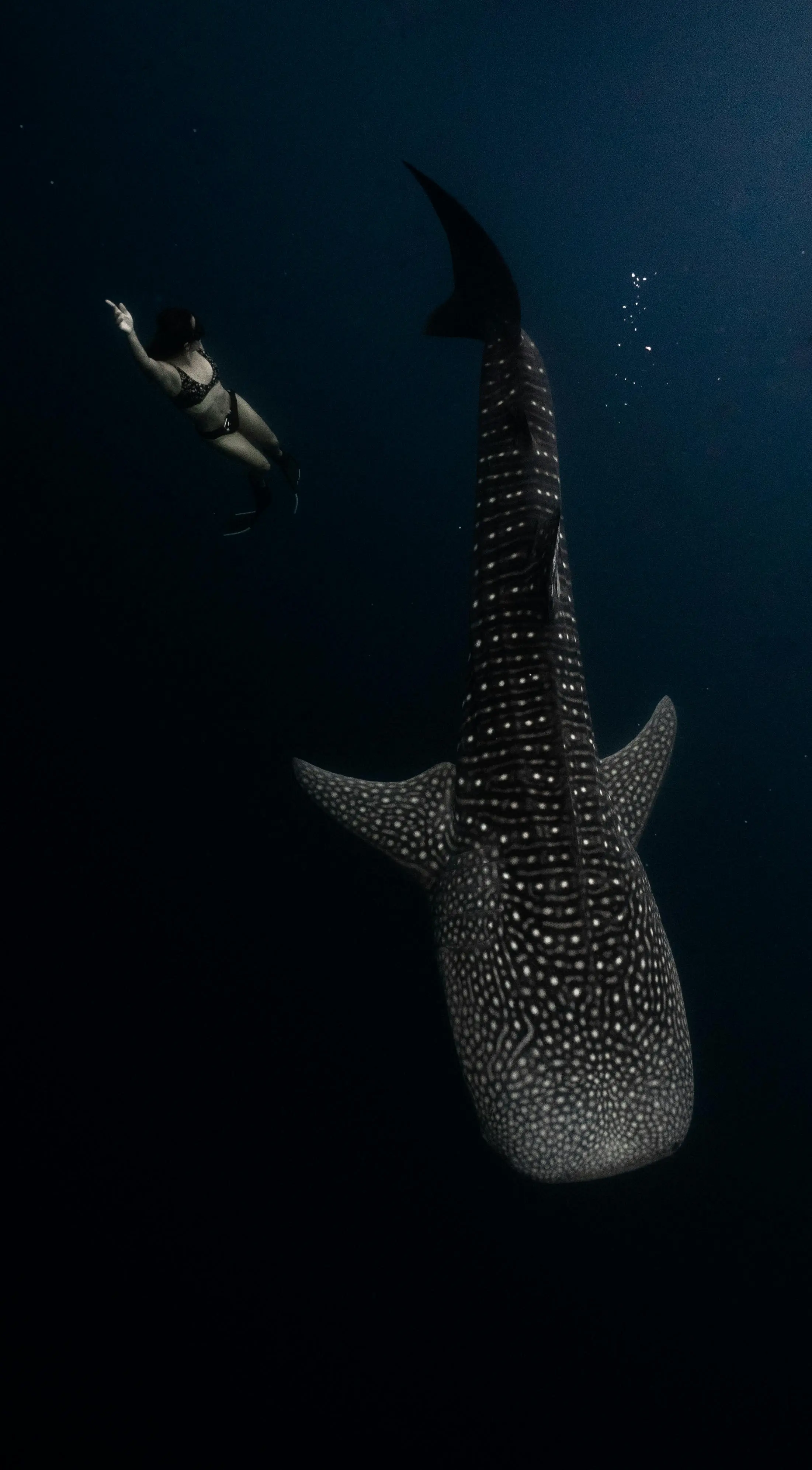
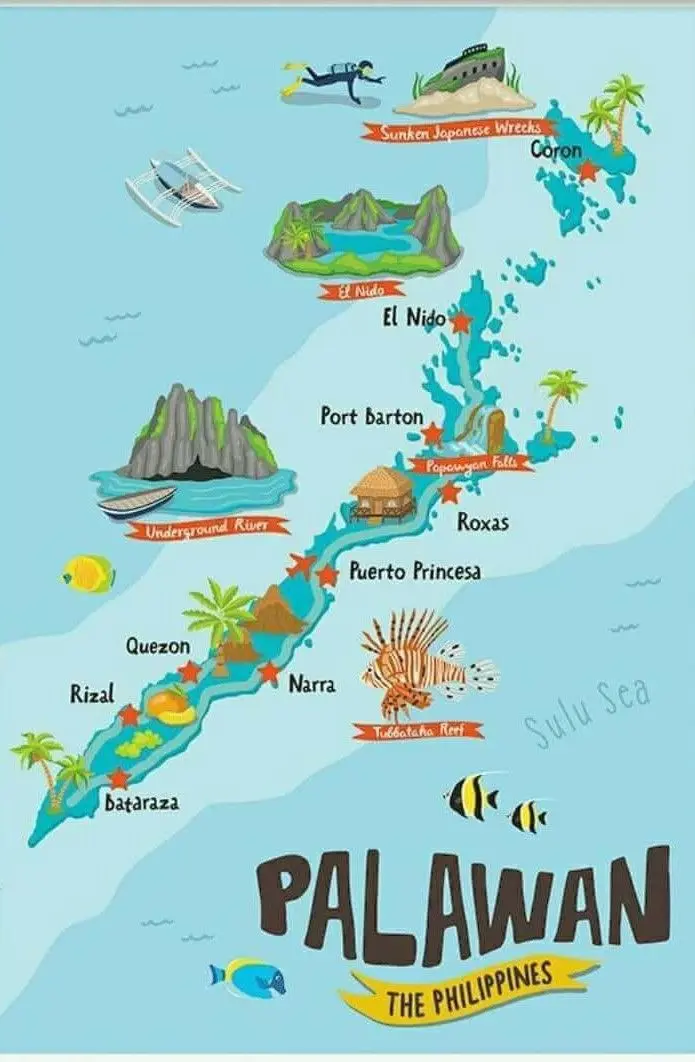
Yes. You can swim with wild whale sharks in Puerto Princesa from April to October, when they feed in Honda Bay. The animals are not fed or baited, so a swim happens only if a shark is at the surface and a morning can end with no entry at all. When one is there, a guide leads the entry, guests stay at least 3 metres from the body and 4 metres from the tail, and nobody touches, chases or blocks the animal.
Honda Bay Is Not a Local Secret — It Is a Documented Hotspot
This is the part most tour listings never mention, and it is the strongest reason to come here rather than a feeding site.
Honda Bay is designated an Important Shark and Ray Area by the IUCN Shark Specialist Group, qualifying both because Endangered whale sharks and oceanic manta rays regularly occur here and because the bay functions as a feeding area for them. The designation records roughly 428 individual whale sharks identified since 2018, a mean of about 41 sharks present at any one time during the season, and places Honda Bay among the 25 largest whale shark aggregation sites in the world.
The underlying science was published in Scientific Reports in 2019 by researchers from LAMAVE, who worked here with the city government and the Palawan Council for Sustainable Development. In one season alone — April to October 2018 — they photo-identified 117 individual sharks from 507 encounters, with another 66 identified from public photographs posted online.
Satellite tags then showed where these animals go. One shark travelled to Lahad Datu Bay in Sabah, Malaysia and returned within a year. Another reached the Malay-Filipino border before coming back. A shark first identified in East Kalimantan, Indonesia in 2013 turned up in Honda Bay in 2018. The paper describes the first documented international return movement of whale sharks in Asia, and calls Honda Bay a globally important site for the species.
In plain terms: the sharks you might meet here are wild animals moving between three countries, and this bay is one of the places they choose to feed.
Which Whale Sharks You Actually Meet
Expectations matter, so here is the honest picture from the same research.
The sharks recorded in Honda Bay ranged from 2.25 to 8 metres, averaging about 4.5 metres, and 96.5% of those that could be sexed were male. These are mostly juvenile males. They are still the largest fish you will ever swim beside — a 5-metre animal is longer than the boat’s beam and wider than a doorway — but they are not the 12-metre adults that documentaries favour.
Whale sharks (Rhincodon typus) are filter feeders. They swim open-mouthed through concentrations of plankton, fish eggs and small schooling fish, processing thousands of litres of water an hour through their gills. They are listed as Endangered on the IUCN Red List, uplisted from Vulnerable in 2016 after the global population was inferred to have more than halved over three generations. Nothing about a whale shark is interested in eating you.
Season: April to October, and Why No One Should Promise More
The research season and our operating season are the same: April to October. Outside those months we do not run the tour, because the animals are not reliably here and pretending otherwise would mean selling a boat ride as a wildlife encounter.
Inside the season, we do not claim a peak month. Plankton, current, wind and water clarity move week to week, and a settled morning in May can outperform a choppy one in July. Instead of a marketing figure, we publish the crew sighting log: the date of the last confirmed sighting, how many completed departures recorded one, how many animals were counted, and the method behind each number. Read it before you book and judge the season yourself.
The Morning, Hour by Hour
| Time | What happens |
|---|---|
| 6:15–6:30 AM | Hotel pickup from your Puerto Princesa city-centre hotel |
| 7:30 AM | Arrive at the pier — safety briefing, gear fitting |
| 7:50 AM | Speedboat departs, about 20 minutes to the wildlife area |
| 8:00–8:30 AM | Drone scan for whale sharks and dolphin pods |
| 8:30–11:00 AM | Search, with a guided entry only when a shark is at the surface. There is no set number of entries, and a morning can have none. |
| 11:30 AM | Coastal lunch, mostly meatless and peanut-free |
| 1:00 PM | Back at the pier, then hotel drop-off |
Afternoons are free. The Puerto Princesa things-to-do guide covers what actually fits into a half day after a morning at sea, and the city travel guide handles transport and where to stay. Do not book the Underground River for the same day — both need a morning.
What ₱3,500 Includes
- Hotel pickup and drop-off by air-conditioned van, city centre
- 30ft speedboat with quiet 4-stroke engines
- Drone spotting, used to find animals rather than chase them
- Anti-fog mask, snorkel and fins for every guest
- Life vests, so non-swimmers are genuinely welcome
- Professional wildlife guide in the water on every entry
- Crew field notes logged and published
- Coastal lunch, mostly meatless and peanut-free, plus water and soft drinks
- All marine park fees and permits
- A clear-water backup stop when conditions allow
Nothing to pay at the pier.
The Rules, and Why Each One Exists
- 3 metres from the body, 4 metres from the tail. The widely adopted standard promoted by WWF. A tail stroke from a 5-metre animal carries real force, and crowding changes the shark’s course.
- No touching, riding or holding fins. Handling removes the mucus layer that protects a shark’s skin from infection.
- No flash photography. Sudden light disorients an animal that navigates by low-contrast cues.
- Never position above the surfacing path. A shark surfacing into a swimmer is dangerous for both.
- No chasing if it dives. The encounter ends when the animal decides, which is the whole point.
- Small groups, staged entries. Research at the Philippines’ fed site found that 93% of surveys had people within 2 metres of a shark. Crowd size is what makes distance rules impossible to keep.
The guide enforces these in the water. Our ethical whale shark guide explains how to test any operator against them — including us.
Practical Preparation
- Swimming ability: helpful, not required. Say so when booking and the guide plans your entries.
- Seasickness: the ride out is short but open water. If you are prone to it, take medication the night before and again on waking, not at the pier.
- Sun: the morning is fully exposed. A rash guard beats sunscreen — most reef-safe products still wash off into the water where the animals feed.
- Cameras: bring them. No flash, and no selfie sticks extended toward an animal.
- Cash: unnecessary. Fees and permits are included.
Sources
- Photo-ID and telemetry highlight a global whale shark hotspot in Palawan, Philippines — Araujo, Agustines, Tracey, Snow, Labaja and Ponzo, Scientific Reports, 2019
- Honda Bay Important Shark and Ray Area — IUCN SSC Shark Specialist Group
- LAMAVE whale shark research programme
- Tour Z crew sighting log — our own field data, self-reported
Check availability and book the whale shark tour → · Compare Oslob and Puerto Princesa · Read the complete whale shark guide